A Being Human Festival 2025 event by Decolab hosted at Bartlett School of Architecture (BSA), UCL
A Being Human Festival 2025 event by Decolab hosted at Bartlett School of Architecture (BSA), UCL
Opening the City Otherwise
“The everyday is never neutral. It is where belonging, justice, and imagination quietly take shape.”
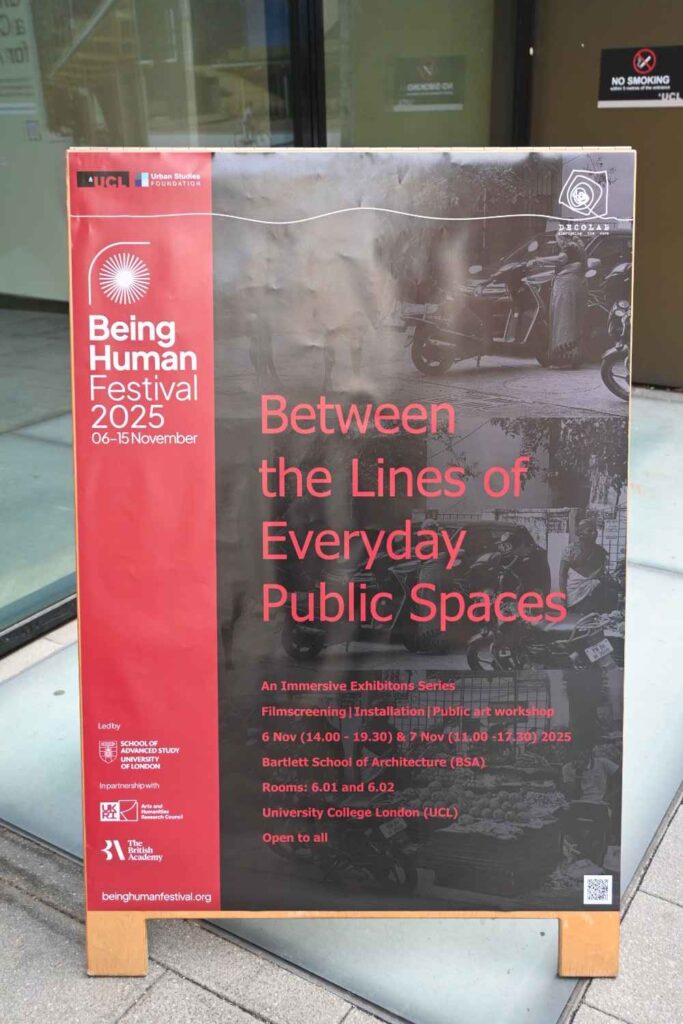
On 6 and 7 November 2025, Decolab co-curated Between the Lines of Everyday Public Spaces as part of the Being Human Festival 2025.
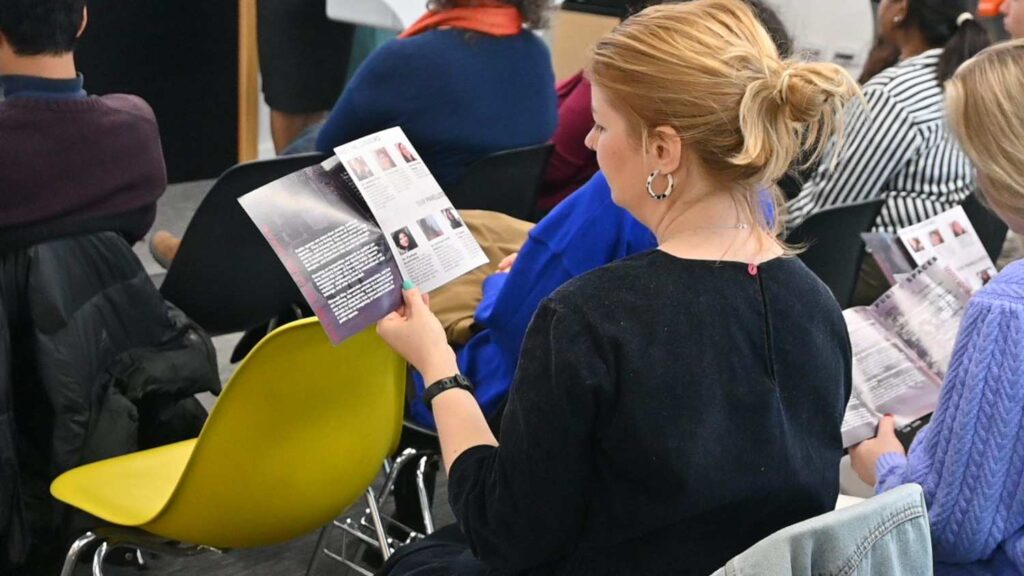
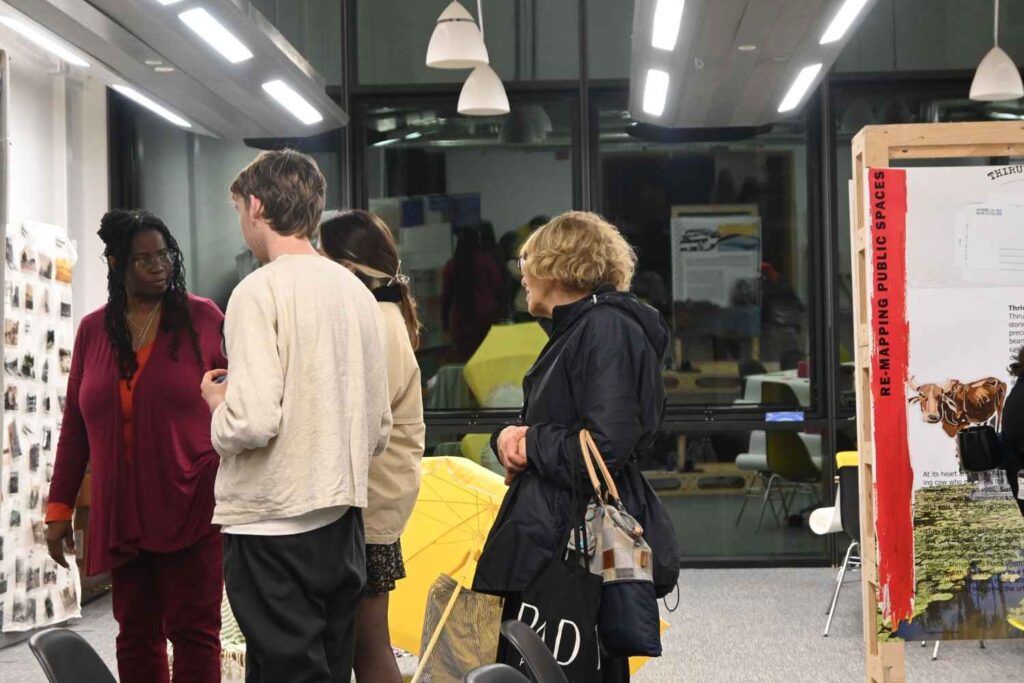
Bringing together film, installation, and participatory art making, the two day exhibition explored how memories, emotions, and everyday acts of care shape our collective experiences of the city. It invited visitors to slow down and attend to the invisible politics of the ordinary, the small gestures, relationships, and rhythms that sustain urban life.
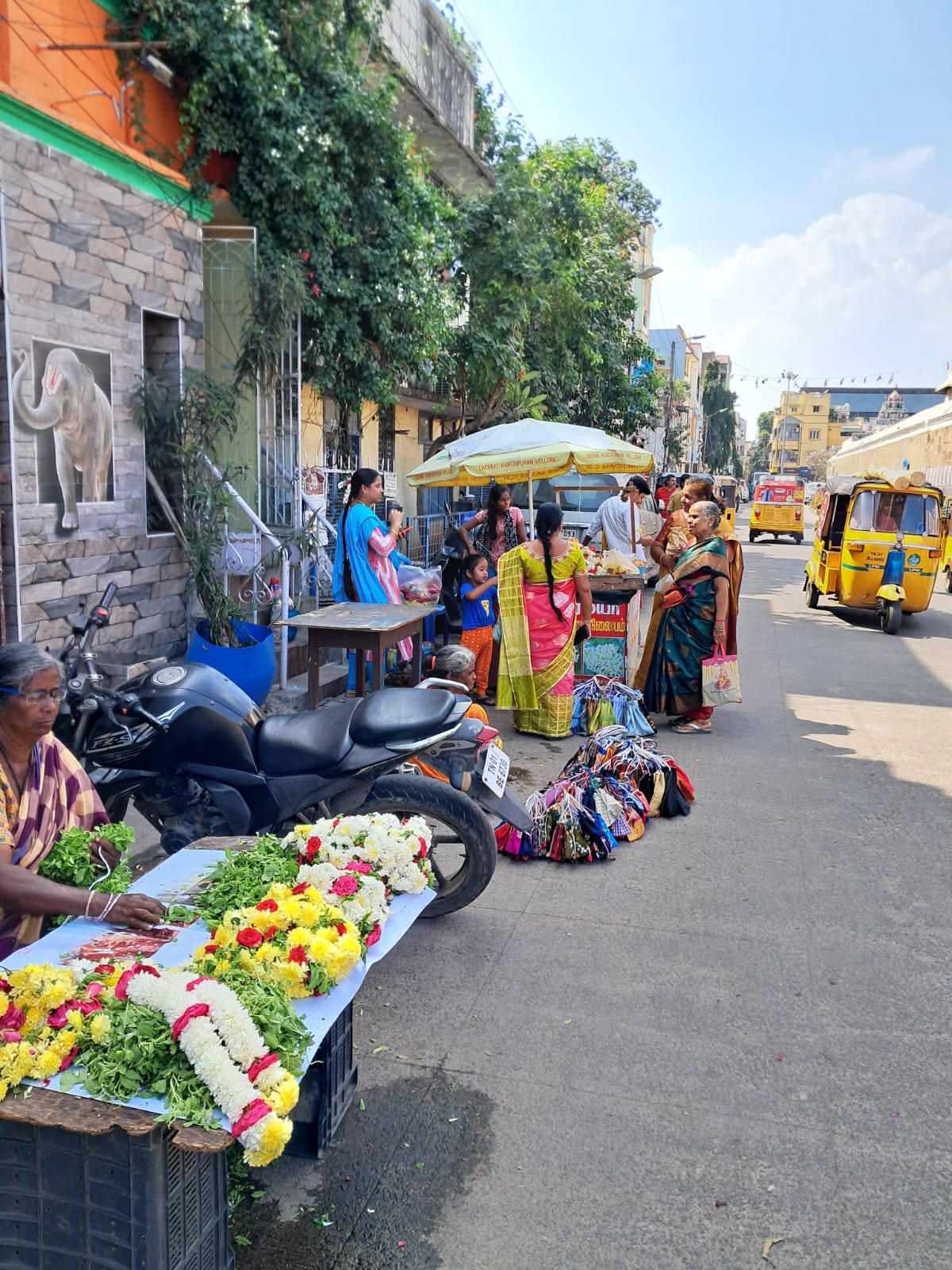
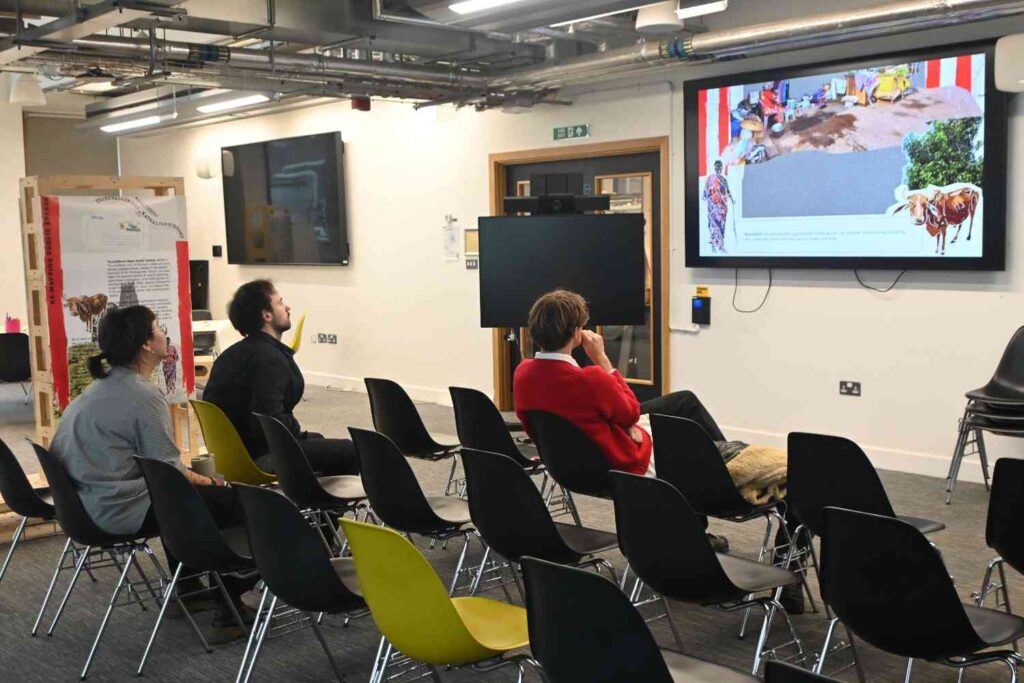
The event opened with the screening of Thiruvallikeni Maadaveedhi Kadhai (The Story of Thiruvallikeni Street), a short film developed from Decolab’s British Academy funded project in Chennai, India. The film reimagines the urban street as a living archive of coexistence, where humans, animals, and materials are entangled in cycles of care, and repair. Narrated through the intertwined journeys of Azhagi the cow and Sundari her companion, the story gently unsettles human centred perspectives of the city, inviting viewers to think with, rather than about, the more than human world.
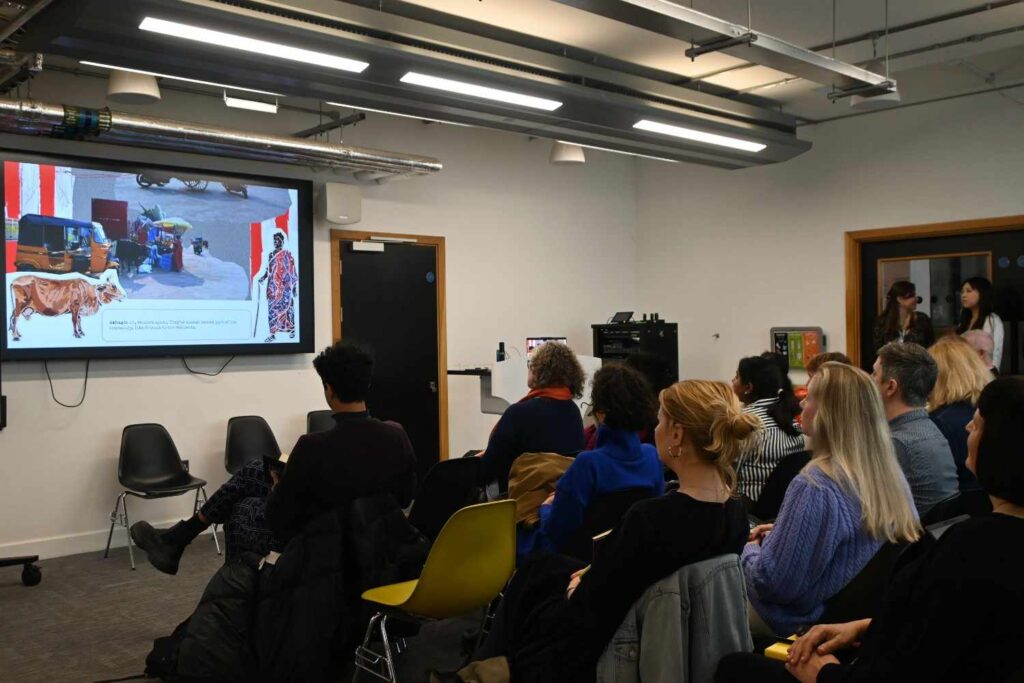
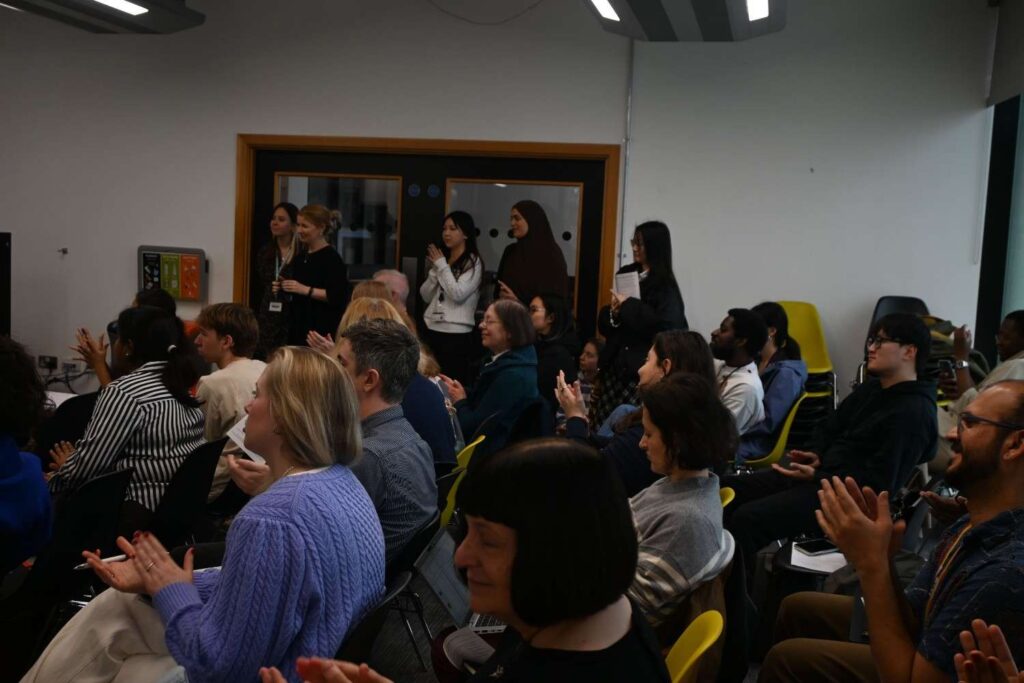
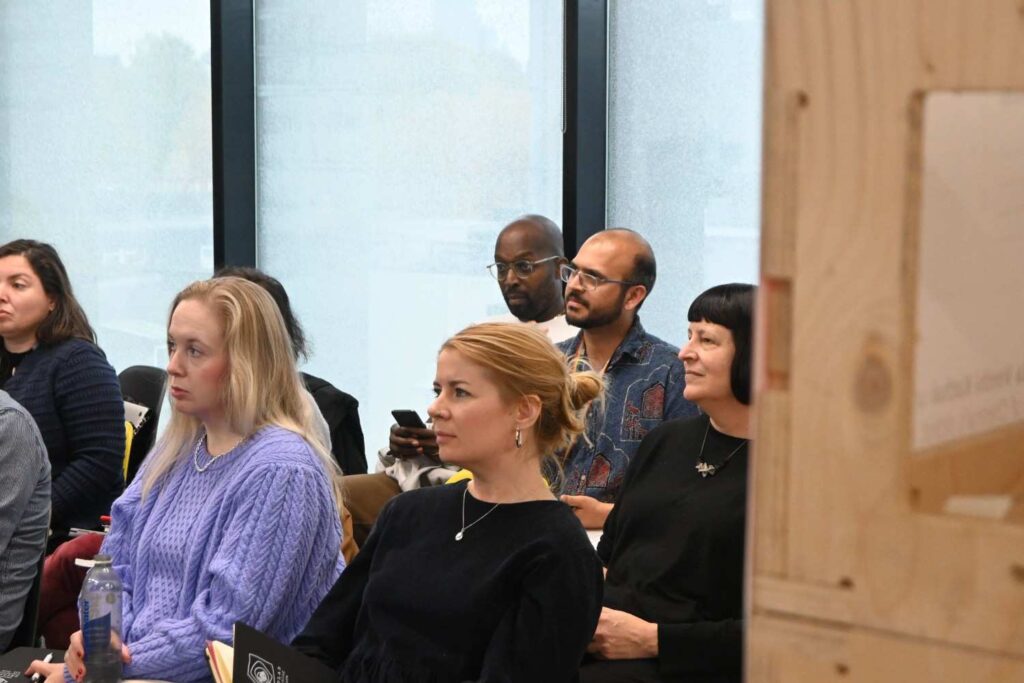
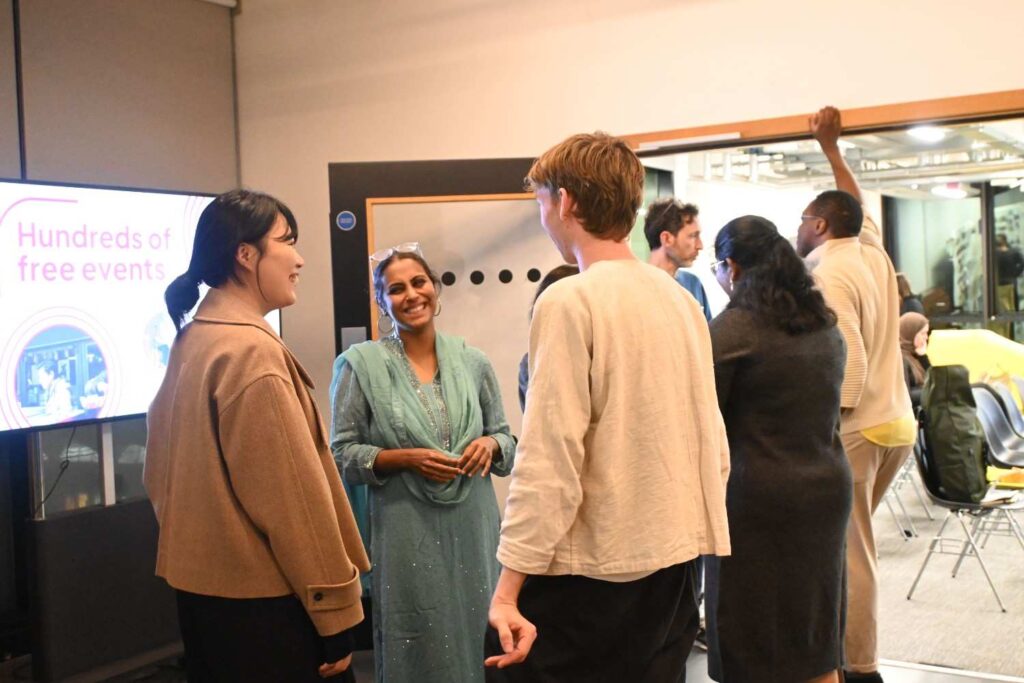
Following the screening, Dr Lakshmi Priya Rajendran initiated a reflective panel discussion with Dr Pushpa Arabindoo (UCL Geography), Dr Kamna Patel (UCL Development Planning Unit), and Dr Nezhapi Dellé Odeleye (Anglia Ruskin University). Together, they reflected on what the everyday reveals about public space, justice, and belonging, and how creative and critical practices can reimagine the city as a space of relations rather than separation
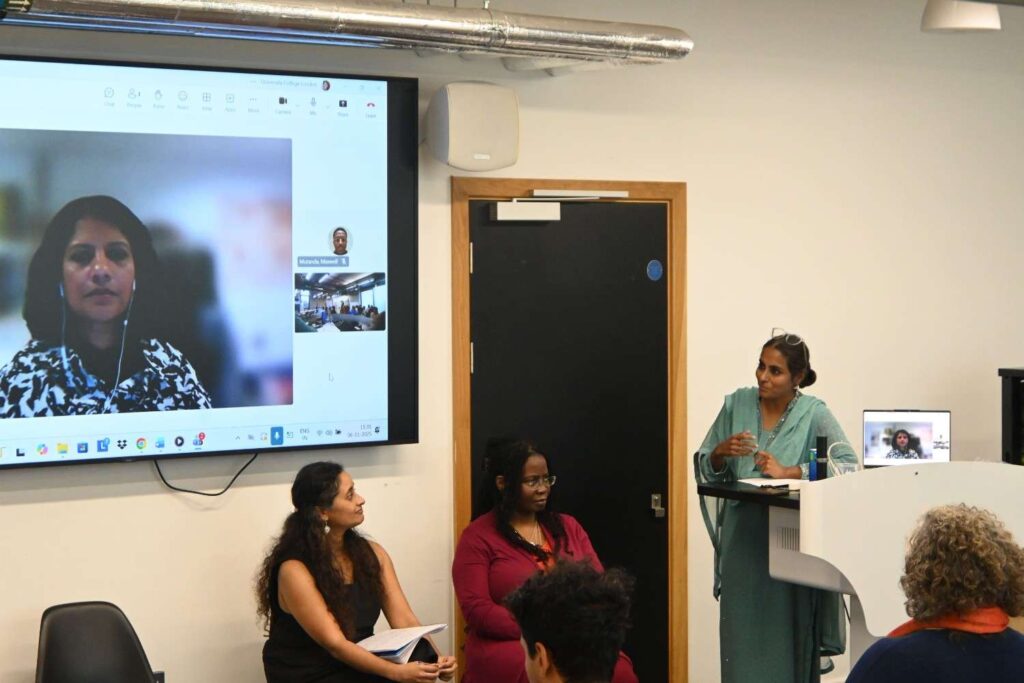
The Politics of the Ordinary
Opening the dialogue, Lakshmi invited the panellists to consider a key question through the lens of their scholarship and practice: What does the everyday mean to you when thinking about public space, and where do you locate care or imagination in your own work?
Dr Pushpa Arabindoo reflected on the productive tensions between planning visions and lived urban realities, particularly in the context of Chennai. She spoke about how informal infrastructures, improvised uses of space, and even so-called wastelands hold potential as spaces of resistance and reimagination. Rather than viewing these terrains as abandoned or failed, Pushpa described them as transitional spaces’, temporal and ecological zones where care and repair, become forms of agency.
Dr Kamna Patel turned the conversation towards the politics of knowledge and belonging. Drawing on her work on race, development and deterritorialisation of knowledge production, she asked: If we take seriously the idea that public space is a site of knowledge, how might we decolonise how we learn from the everyday city? She also reflected critically on the contradictions within terms like belonging, noting that belonging can both empower and exclude, depending on who defines it, and whose experiences are recognised as legitimate within urban narratives.
Dr Nezhapi Dellé Odeleye built on this thread by engaging with indigenous knowledge systems and their potential, as well as their inherent limitations. She noted that while indigenous frameworks offer pluriversal ways of knowing and imagining, they also contain internal hierarchies and inequities that must be acknowledged. For Nezhapi, the power of indigenous urbanism lies not in essentialising tradition but in its oral, relational, and processual nature, ways of knowing that foreground continuity, care, and collective responsibility.
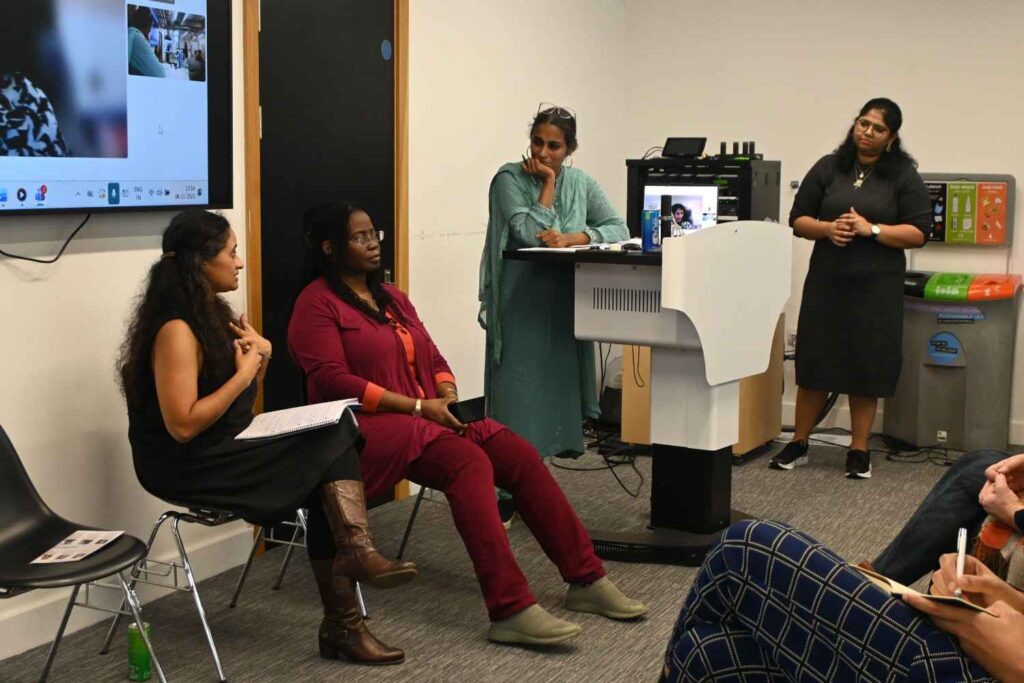
Reclaiming the Commons
The discussion evolved into a broader reflection on feminist and decolonial practices of reclaiming the urban commons. The panellists argued that reclaiming is not a singular act of resistance but an ongoing process of negotiation, listening, and collective worldmaking. The situated practices of storytelling, mapping, or participatory art (key components of the exhibition) work towards expanding the boundaries of who and what counts in the imagination of public space.
Throughout the dialogue, the audience engaged with probing questions about how to sustain care in the face of precarity, how to navigate the tension between structure and spontaneity, and how to make room for voices, human and otherwise, that technocratic urban planning too often silences.
Participatory Making and Collective Care
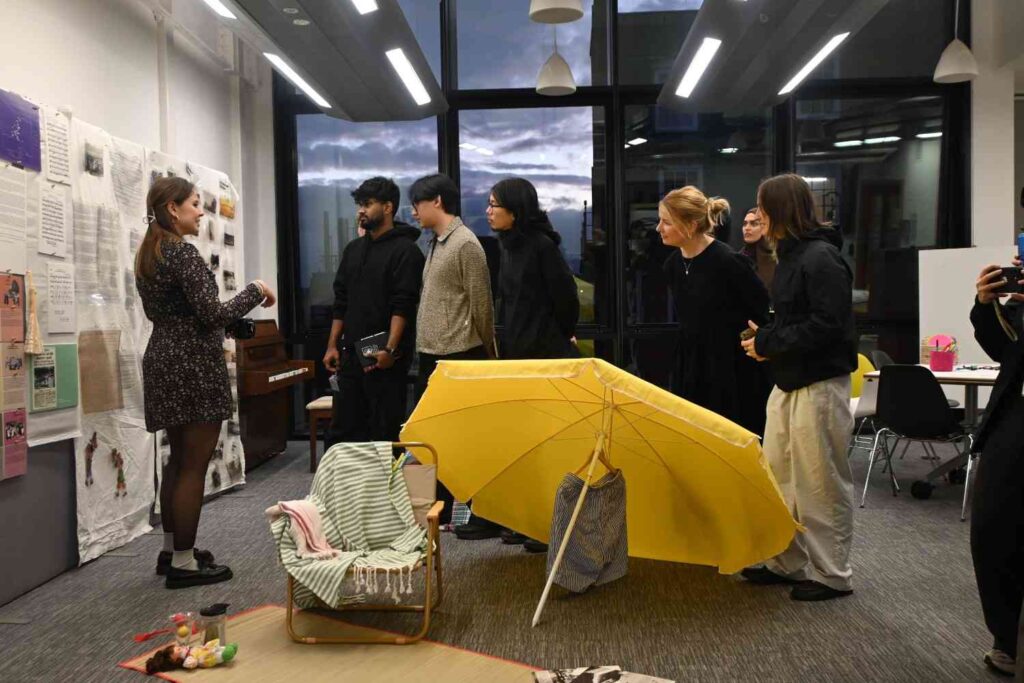
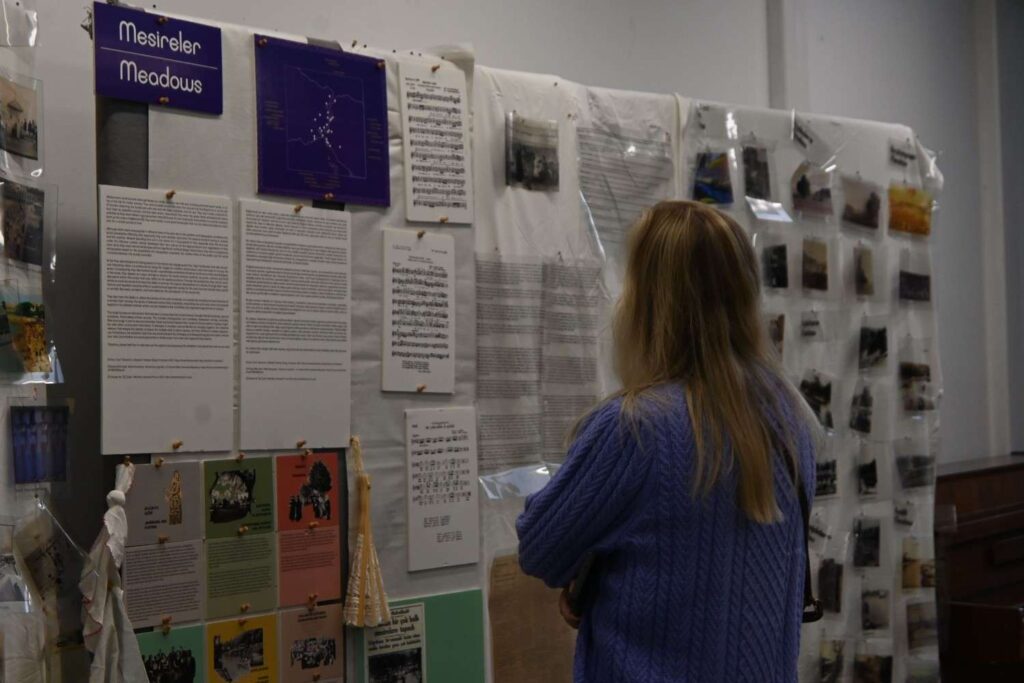
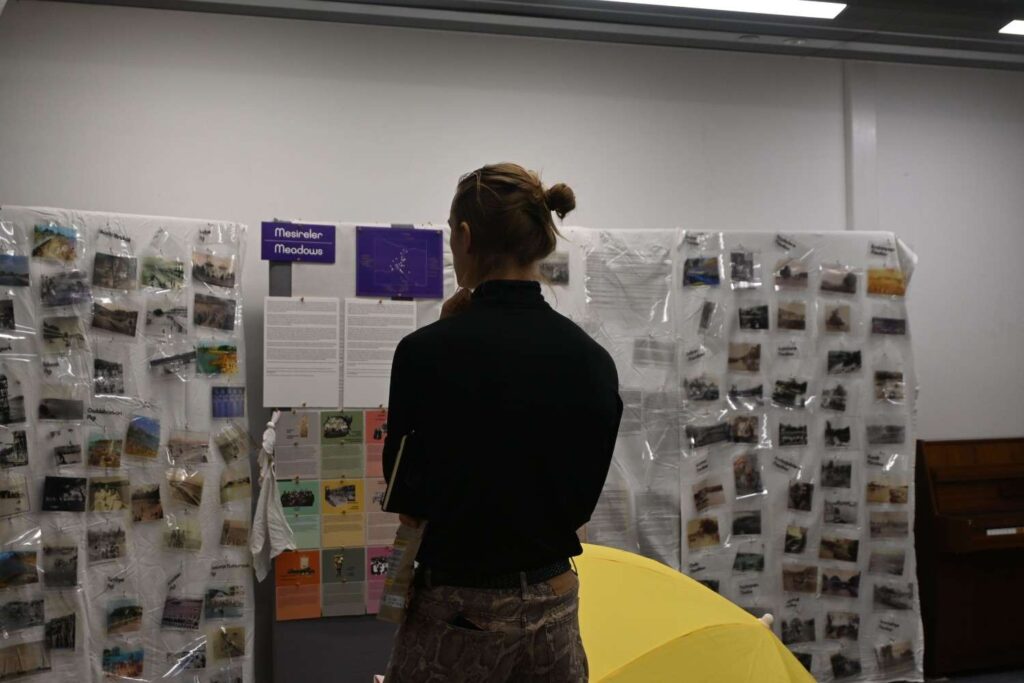
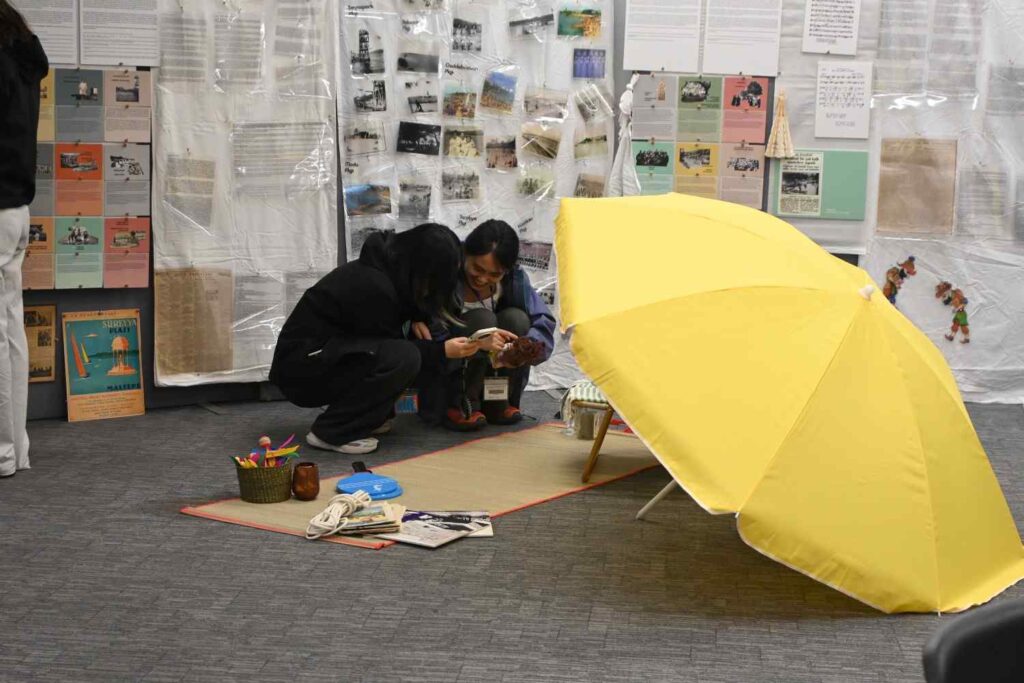
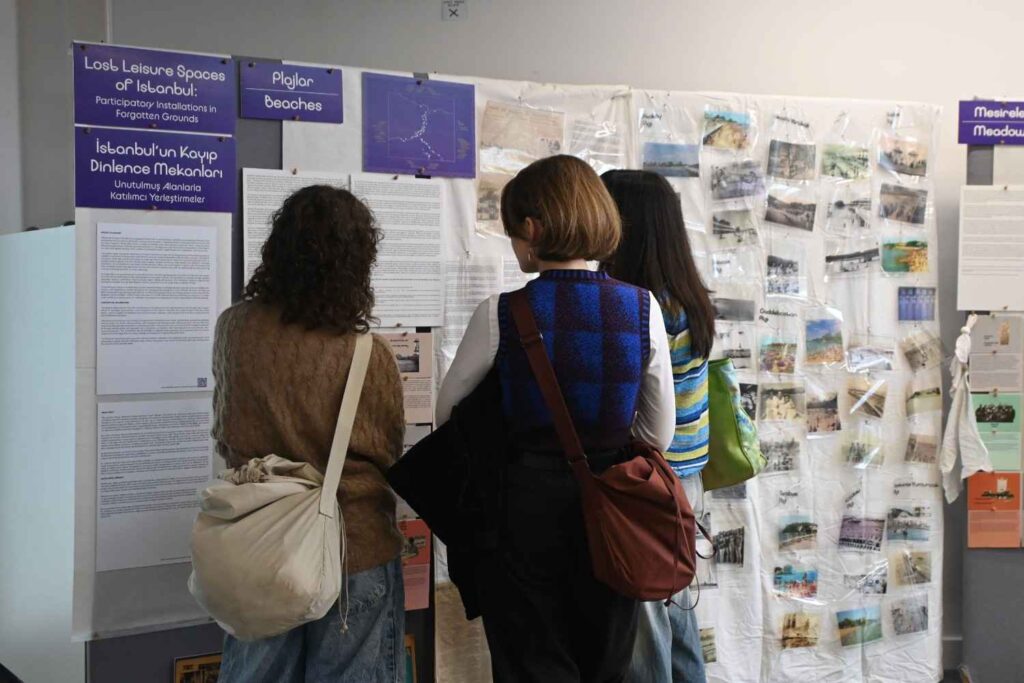
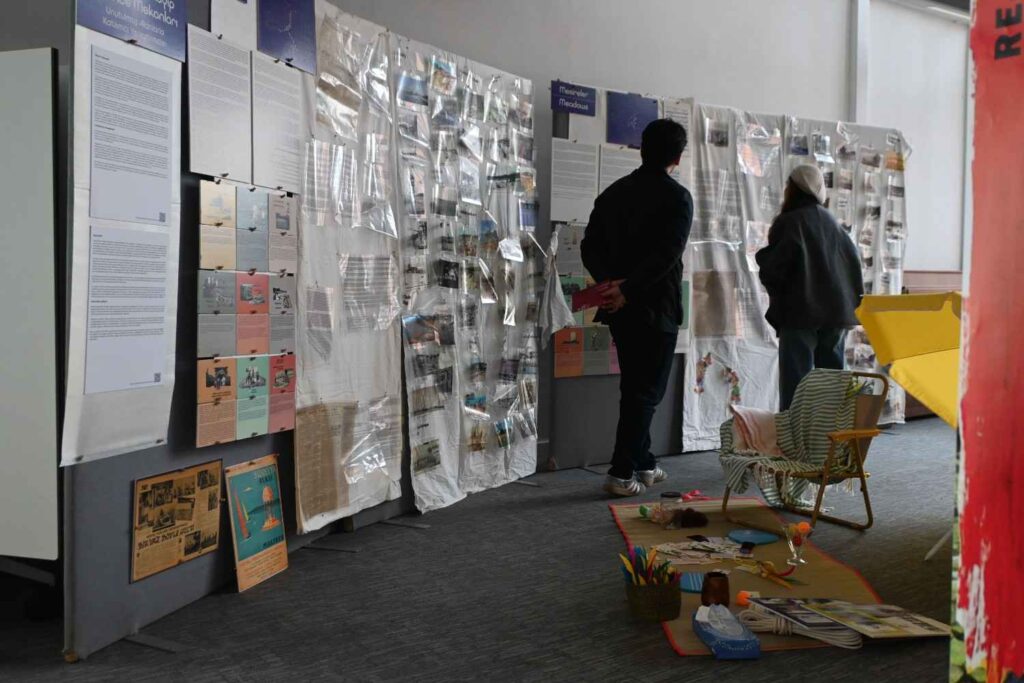
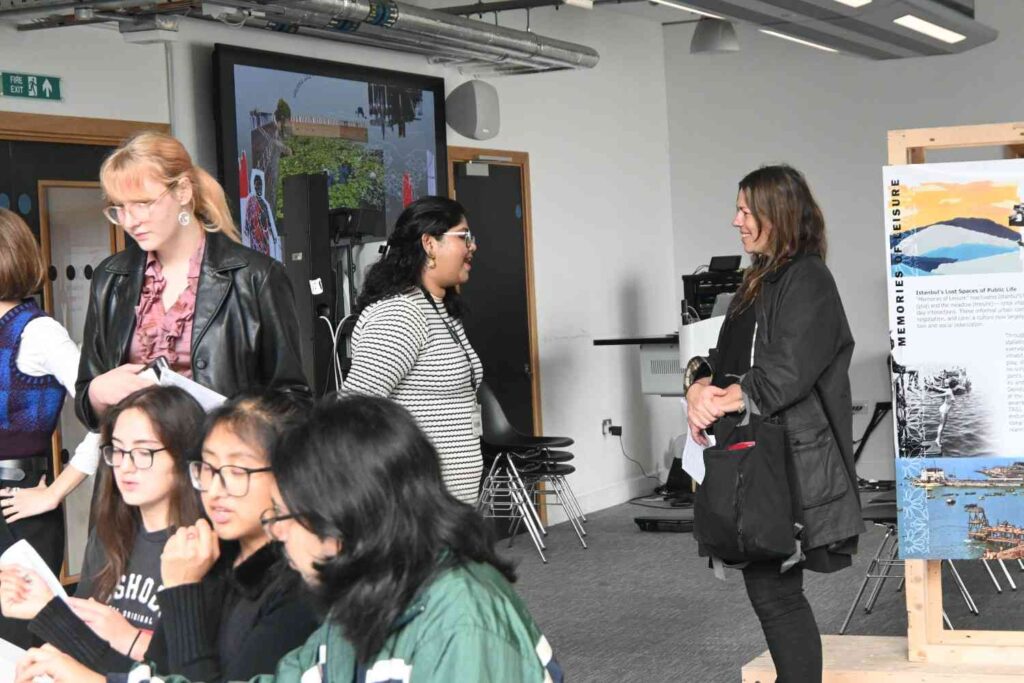
Beyond the panel, the exhibition continued to evolve through the installations and workshops. Kivilcim Goksu Toprak’s visual installation Memories of Leisure reactivated Istanbul’s forgotten leisure landscapes- the beach (plaj) and the meadows (mesire). Through everyday material objects, it wove fragments of everyday life, snippets of conversations, traces of movement, and material textures into layered visual stories of belonging and loss.
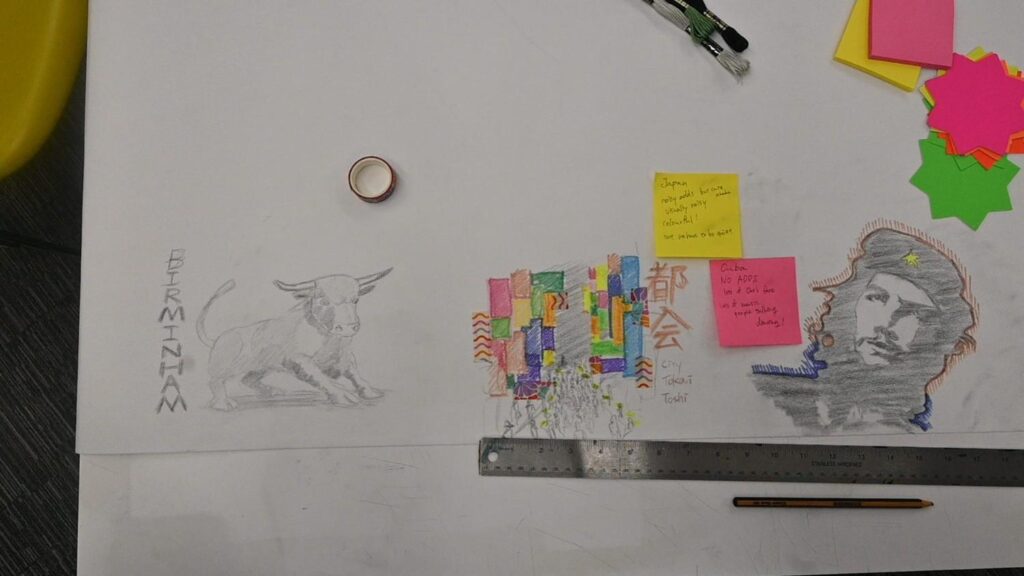
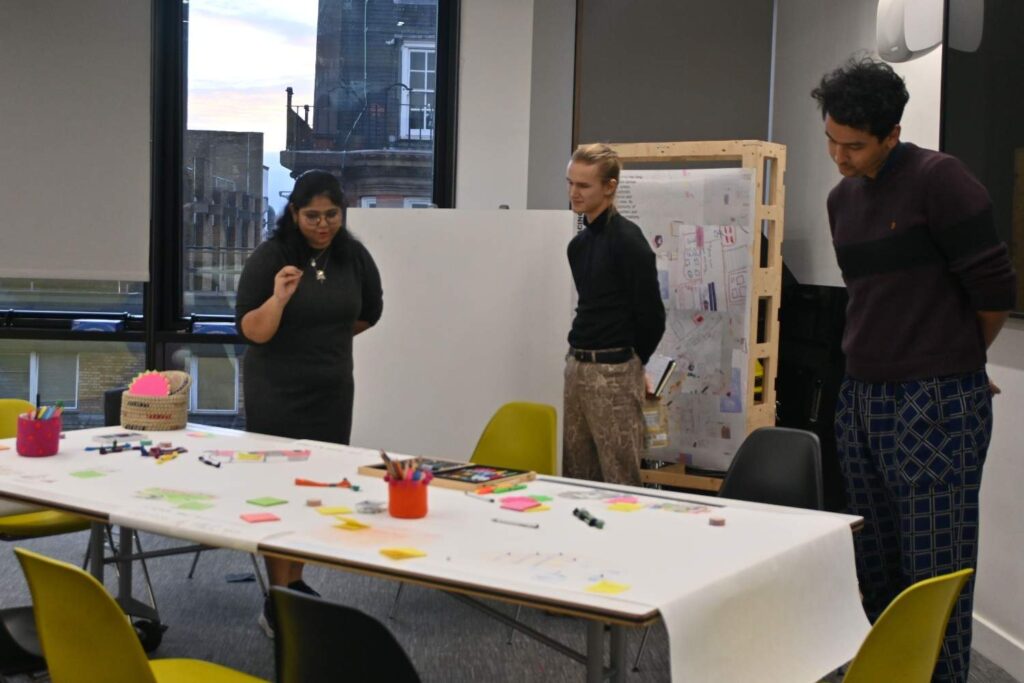
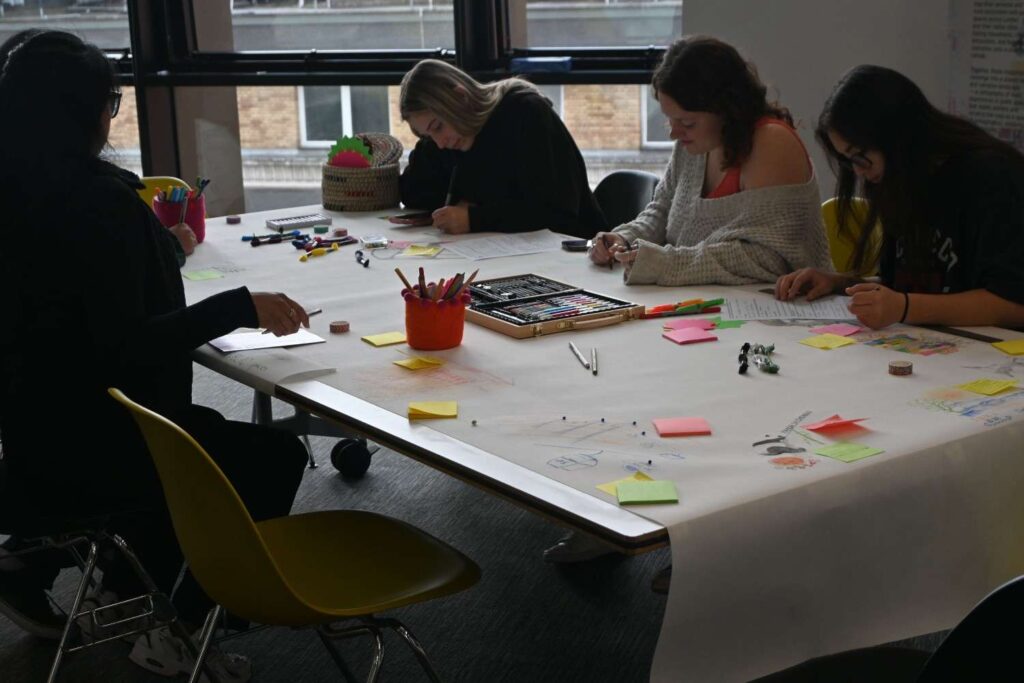
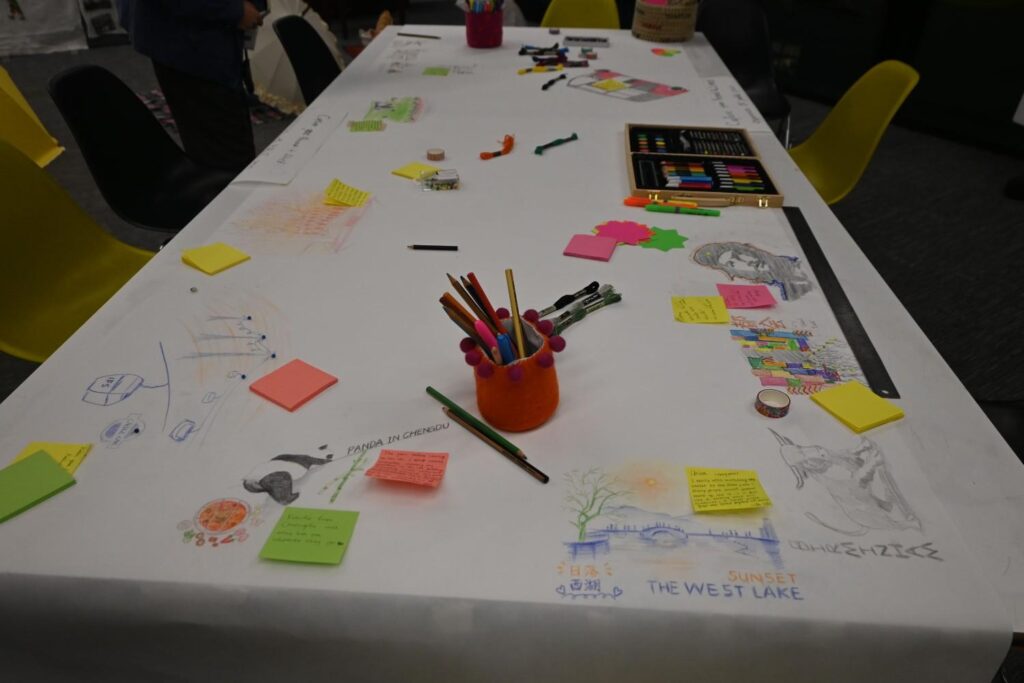
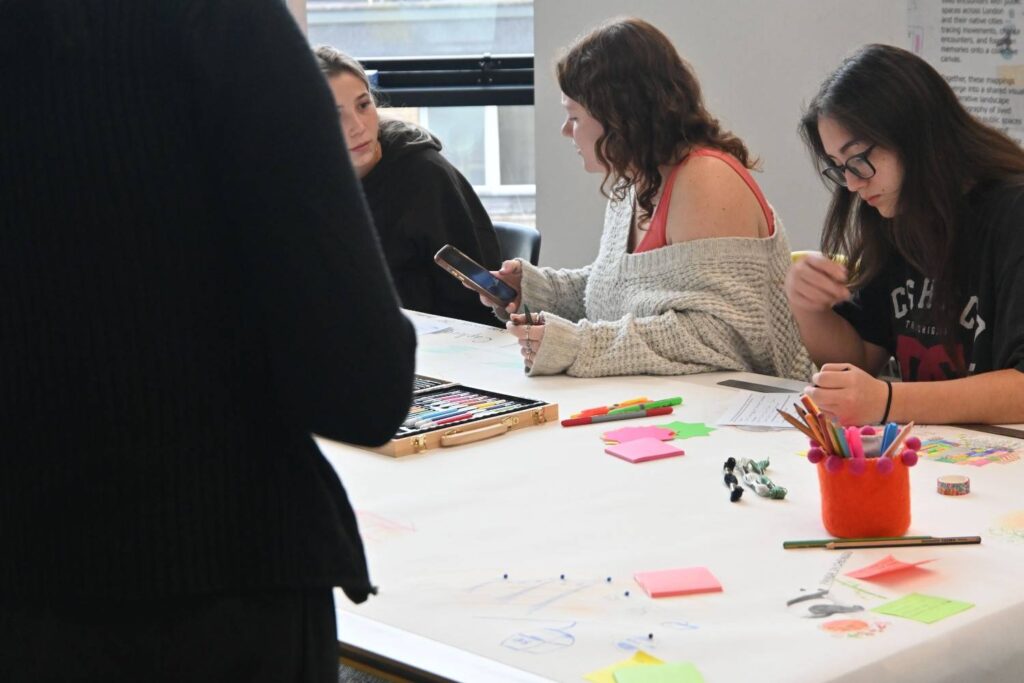
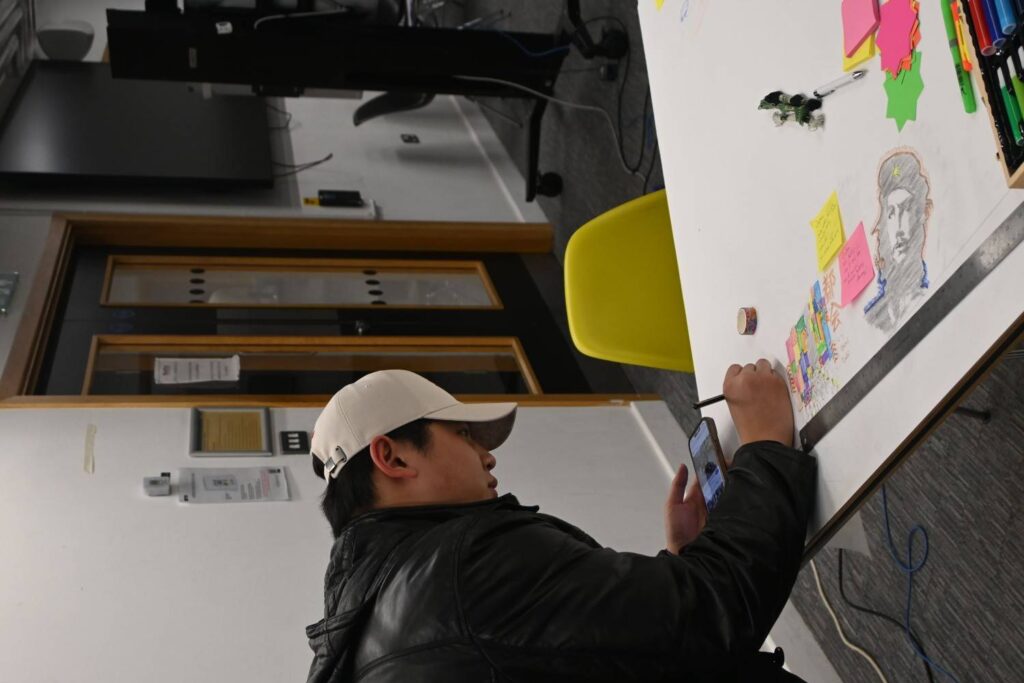
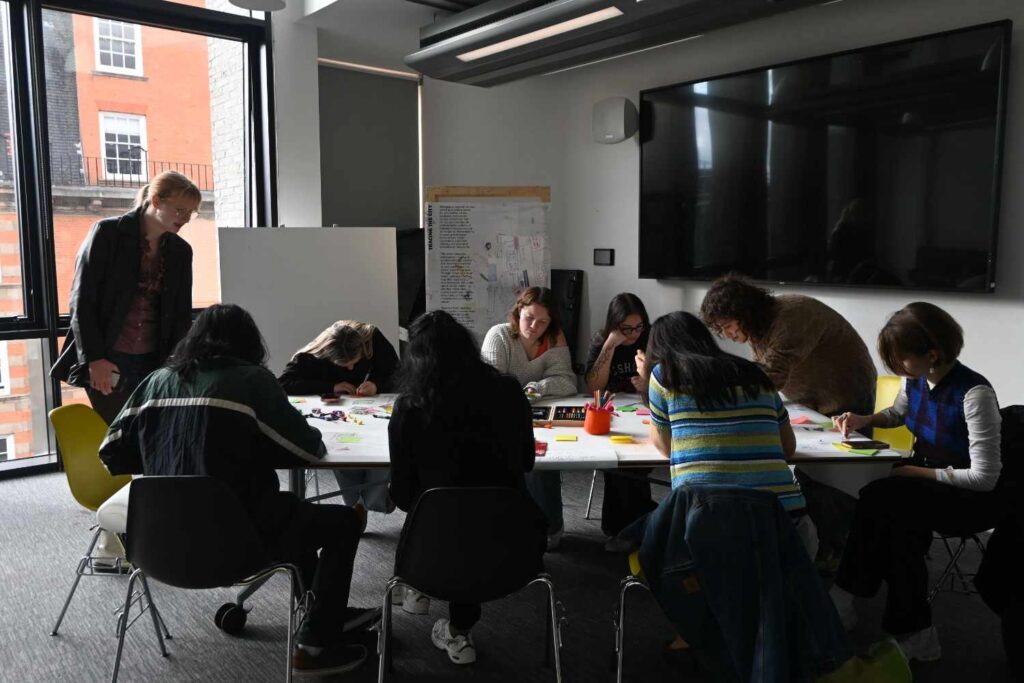
Dr Nian Paul’s participatory art making workshop invited visitors to reimagine the lived experiences of public spaces in London and their native cities through drawings, words, and gestures, transforming the gallery into a living canvas of collective reflection. The canvas threaded traces of belongingness in cities around nature, food, spaces of leisure, rhythms of life and resistance in public spaces. Over two days, the work became not just an exhibition but a commons of care, a space of relational making that blurred the line between artist and participant.
Closing Reflection
Between the Lines of Everyday Public Spaces captures the spirit of what Decolab continues to strive for: creating spaces where research, art, and collective practice meet to rethink how we live together in our cities. The exhibition may have closed, but the conversations it sparked about care, belonging, and decolonial imagination will continue to ripple through future collaborations and creative experiments.
Acknowledgements
Institutional and Organisational Support: British Academy, Being Human Festival, Institute of Advanced Studies, Bartlett School of Architecture and Urban Studies Foundation.
Exhibition and Creative Support Team: Denis Delaney, Arisa Shiraishi, Jamie Jones and Yun Subin.
Volunteer Support: Bashayer Hussain Kadhim and Yuxin Huang